

PracticePC: Interprofessional Continuing Education in Palliative Care for Practicing Clinicians
Palliative care is an interprofessional specialty focused on symptom management, quality of life, relief of distress, and communication so that care decisions are consistent with personal values, for patients who are living with serious illness and their families.
The UCSF Interprofessional Palliative Care Continuing Education Course (Practice-PC) was created in 2015 to address a workforce shortage that is a key limiting factor in the dissemination of palliative care.
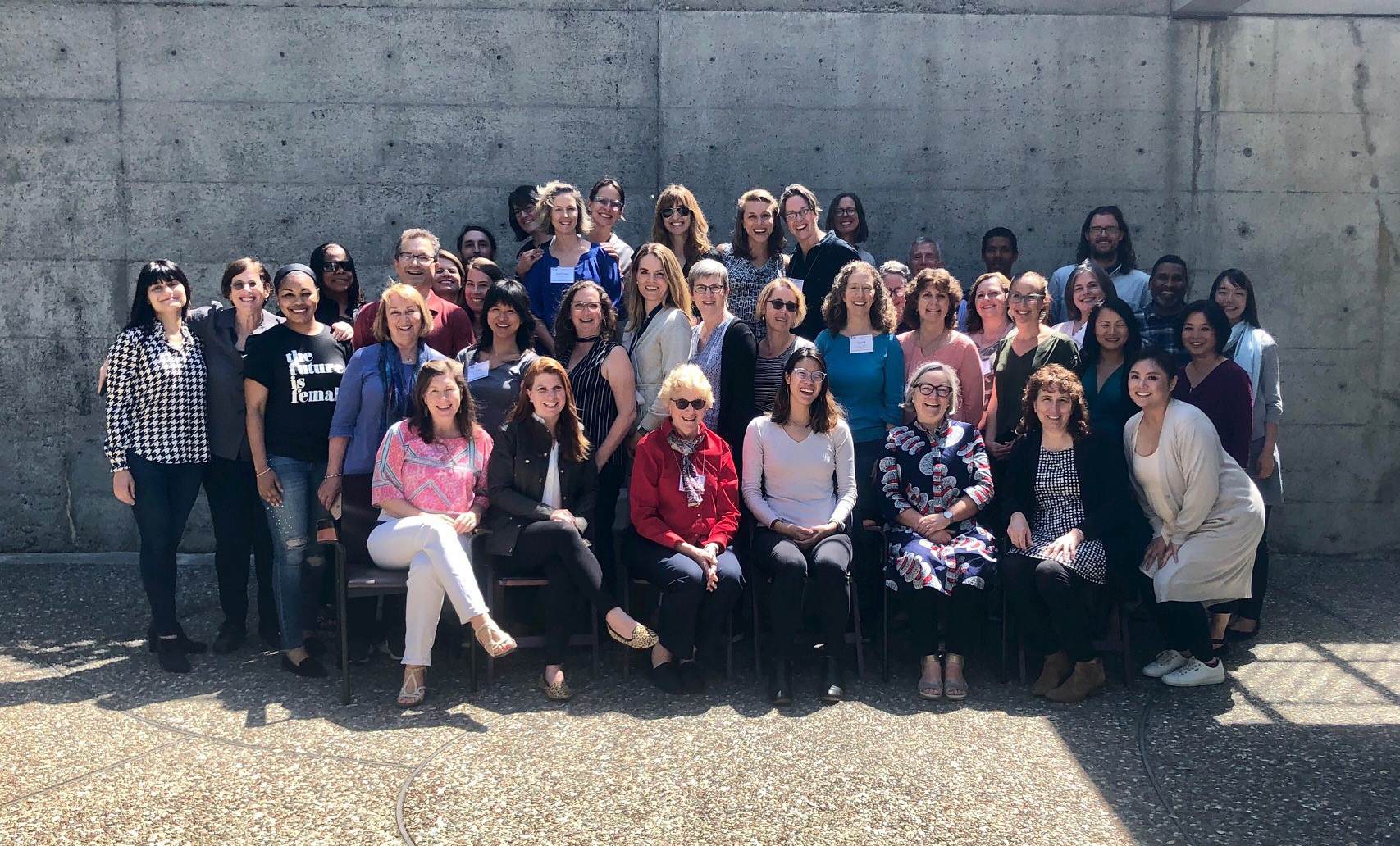
Program features:
- In-person interactive learning
- Small interprofessional cohort
- Expert interprofessional faculty, including nursing, physician, social work, and chaplain leads
- Training in core domains of clinical palliative care
- VitalTalk-style in-depth communications training
- Focus on professional wellbeing
- Mentorship from program faculty and peers
Curriculum includes:
- Interprofessional assessment
- Pain and symptom management
- Psychosocial and spiritual wellbeing
- Interprofessional practice
- Ethics and advance care planning
- Palliative care within the health system
- Anticipatory guidance
- Last hours and bereavement
Who Is This Program For?
This program was developed to meet the needs of working professionals from a range of disciplines and work settings across the greater Bay Area. We encourage all professionals to apply, including but not limited to nurses, advanced practice providers, physicians, chaplains, community-based clergy, social workers, pharmacists, nursing aides, case managers, psychologists, therapists, family support coordinators, administrators and interpreters.
Prior participants include professionals who:
- Regularly work with seriously ill patients and want to improve their palliative skills
- Want to develop or lead programs in palliative care
- Champion palliative care in their institutions
- Desire an in-depth introduction to the field
- Plan to transition into the field of palliative care
Format and Schedule
This program is designed as a longitudinal, small group experience over the course of 9 sessions. This format maximizes interaction between students and faculty and among students, and promotes students’ ability to integrate learnings into their clinical practice.
In-Person sessions occur from 9 AM - 5 PM and will be in person at the Partnership Health Plan offices in Fairfield, California, 4605 Business Center Drive, Fairfield, CA 94534, except for March 26, 2027 which will take place at Fernwood Cemetery in Mill Valley, California. Virtual sessions will take place from 9 AM - 1:45 PM via Zoom.
Don’t let transportation be a barrier! We will do our best to arrange carpools from Amtrak, Bart, Ferry, and other central locations
Tuition
Program Tuition for 2026 - 2027 cohort: $2,500
If you would like to attend the course but the tuition is a barrier, please contact us and we will see if we can assist with finding a partial sponsor for you.
Tuition includes a maximum of 30 hours of continuing education credits. Please contact us with questions.
Please note we do not provide refunds except for in extenuating circumstances with documentation. If you wish to request a refund, please contact DorAnne Donesky, Practice PC Co-Director.
Application Process and Requirements
We can accommodate approximately 40 participants for the 2026 - 2027 cohort. All health professionals who wish to gain additional training in palliative care are invited to apply. (Prior training in palliative care is not required).
Applicants must have completed the initial degree and required licensure and/or certification for their profession. The cohort selection is based on commitment to the field and planned impact, and to yield a cohort with participants from a range of professions, work locations, and backgrounds.
FAQS
Is the course refundable?
No, we do not provide refunds except for in extenuating circumstances with documentation. If you wish to request a refund, please contact DorAnne Donesky, Practice PC Co-Director.
Do you provide accommodations for a disability or special needs?
If you require accommodations for a disability or special needs to participate fully in this course, please contact the Course Administrator at [email protected] as soon as possible. We are committed to providing an inclusive learning environment and will work with you to ensure that appropriate arrangements are made in a timely and confidential manner.
LCSW Learning Objectives for Each Session in Cohort 8 (September 2026 - March 2027)
Learning objectives for other professions available upon request.
Session 1: Palliative Care Overview (In-person)
- Write a clinical definition of palliative care that can be used when you introduce palliative care to a patient, a friend, or a colleague.
- Determine three institutional challenges and three systemic opportunities encountered when implementing a comprehensive approach to palliative care for patients living with serious illness.
- Identify three core values from the NASW Code of Ethics that guide client-centered decision-making in interprofessional palliative care practice
- Compare and contrast user-friendly messaging about hospice, palliative care, and advance care planning as presented at seriousillnessmessaging.org
- Distinguish between the eight National Consensus Project (NCP) domains of quality palliative care to guide interprofessional treatment planning.
Session 2: Multidimensional Palliative Care Screening, Assessment, and Interventions (In-person)
- Apply the clinical concept of “total pain” by identifying its four distinct components (physical, psychological, social, spiritual) in a diagnostic formulation.
- Design a comprehensive bio-psycho-social-spiritual screening protocol incorporating at least two criteria for referrals to domain experts.
- Assess at least one specific National Consensus Project domain of expertise that directly aligns with your own current clinical scope of practice.
- Produce four domain-specific clinical interventions designed to alleviate psychological and existential distress in patients with serious illness.
- Evaluate at least three personal or professional environmental stressors that interfere with clinician well-being.
Session 3: Serious Illness Communication, powered by VitalTalk #1 (Zoom)
- Carry out advanced communication techniques in a simulated patient interaction to reinforce new prognostic information and specify the functional meaning of that information for the family.
- Identify emotional responses in a simulated patient interaction and apply empathetic responses using all five steps of the NURSE mnemonic.
- Design an actionable community-outreach strategy to counteract common misunderstandings about palliative care.
Session 4: Serious Illness Communication, powered by VitalTalk #2 (Zoom)
- Carry out advanced goals-of-care communication skills in a simulated setting using all five steps of the VitalTalk REMAP framework
- Analyze the unique contributions of three interprofessional team members to advocate for integrated, whole-person care in serious illness.
Session 5: Pain and Symptom Management (In-person)
- Plan a comprehensive pain assessment that integrates at least four domains of palliative care.
- Compare two pharmacological and two integrative pain management approaches for acute and chronic pain.
- Identify at least five common non-pain physical symptoms that have a psychological impact in palliative care.
- Explain two non-pharmacologic approaches that can be used for patients with physical symptoms related to serious illness.
- Plan one brief clinical treatment approach for anxiety and one for depression specifically tailored for patients with serious illness.
Session 6: Serious Illness Communication, powered by VitalTalk #3 (Zoom)
- Formulate at least four distinct open-ended questions designed to elicit a client’s personal values during an assessment.
- Carry out a simulated palliative care conversation that accurately extracts at least three core patient and family values.
- Analyze two ways interprofessional teams use clinical informatics to identify and reduce systemic barriers to palliative care access.
Session 7: Care at End of Life; TeamTalk (In-person)
- Identify three physiological signs of active dying and plan corresponding interventions for the family system.
- Determine at least three physiological and psychological changes that commonly occur in a patient during the last days to weeks before death.
- Plan two evidence-based clinical strategies for palliating family distress at the end of life and supporting early bereavement.
- Carry out a simulated family meeting as an interprofessional team, using a structured bio-psycho-social-spiritual screening protocol.
Session 8: Prognostication, Anticipatory Guidance, Ethics, and Advance Care Planning (Zoom)
- Identify three distinct prognostic challenges faced by medical providers across different serious illnesses (e.g., cancer, cardiovascular, pulmonary, renal, neurological).
- Evaluate three evidence-based clinical resources available to assist clinicians with prognostication and anticipatory guidance.
- Classify the distinct collaborative responsibilities of four interprofessional team members (e.g., social work, medicine, nursing, chaplaincy) in initiating and documenting advance care planning discussions.
- Identify at least three common ethical issues frequently encountered in palliative care practice.
- Identify a clinical situation where an LCSW should consult the palliative care pharmacist to resolve a client barrier to complex pain management.
Session 9: Leadership, Advocacy and Program Development
- Evaluate two intentional appreciation or gratitude practices utilized as essential capacities to mitigate clinician burnout in palliative care settings.
- Compare at least 3 distinct cultural, systemic, and clinical factors that actively shape the current landscape of the end-of-life experience in America.
- Assess the unique clinical contributions of at least four distinct members of an interprofessional palliative care team.
Accreditation Information for Cohort 8 (September 2026 - March 2027) (30 units max)
Physicians
This live activity has been approved by the American Association of Family Practice for a maximum of 30 AMA PRA Category 1 credits. CME credits are sponsored by Partnership HealthPlan of California. Physicians should claim only the credit commensurate with the extent of their participation in the activity.
This CME activity meets the requirements under California Assembly Bill (AB) 1195 regarding continuing education and cultural and linguistic competency (CLC), and incorporates real-world scenarios to enhance physician competence in CLC. This CME activity meets the requirements under AB 241 regarding continuing education and implicit bias (IB), and addresses how IB affects perceptions and treatment decisions that lead to disparities in health outcomes.
Nurses
For the purpose of recertification, the American Nurses Credentialing Center accepts AMA PRA Category 1 Credits issued by organizations accredited by the ACCME.
Practice PC is approved by the California Board of Registered Nursing, through Partnership Health Plan, Provider Number CEP 15403, for 30 contact hours.
Social Workers
This course meets the qualifications for 30 hours of continuing education credit for LMFTs, LCSWs, LPCCs, and/or LEPs as required by the California Board of Behavioral Sciences.
Pallium Institute is approved by the California Association of Marriage and Family Therapists to sponsor continuing education for LMFTs and LCSWs (Provider Number: 1033084). Pallium Institute maintains responsibility for this program/course and its content.
Chaplains
This program may be used for continuing education credit for board certified chaplains.
I have a grievance I would like to report. How do I go about doing that?
Grievances shall be submitted by email ([email protected] and [email protected]) and acknowledgment of receipt will be sent within 2 business days. The Program Administrator will review the grievance and respond back to the participant within 1 week.