
A Conversation with Isabel O'Brien, MD
Can you share where you grew up and a fun or formative childhood memory that still inspires you?
I grew up in Palo Alto slightly before the tech boom. It feels so different now. When I was growing up, it was a little sleepier but still academic and intellectual. Everyone was super smart, but not super wealthy.
Growing up in the Bay was amazing. It’s an incredibly resource‑rich environment. My most formative experiences were the science camps I went to. I loved being outdoors and I loved bugs! I remember being in backyards looking into holes in the ground to see what animals might be lurking, checking spider webs, or searching for microcosms under a rock. The natural world has always been a real love of mine.
Any hikes you would recommend?
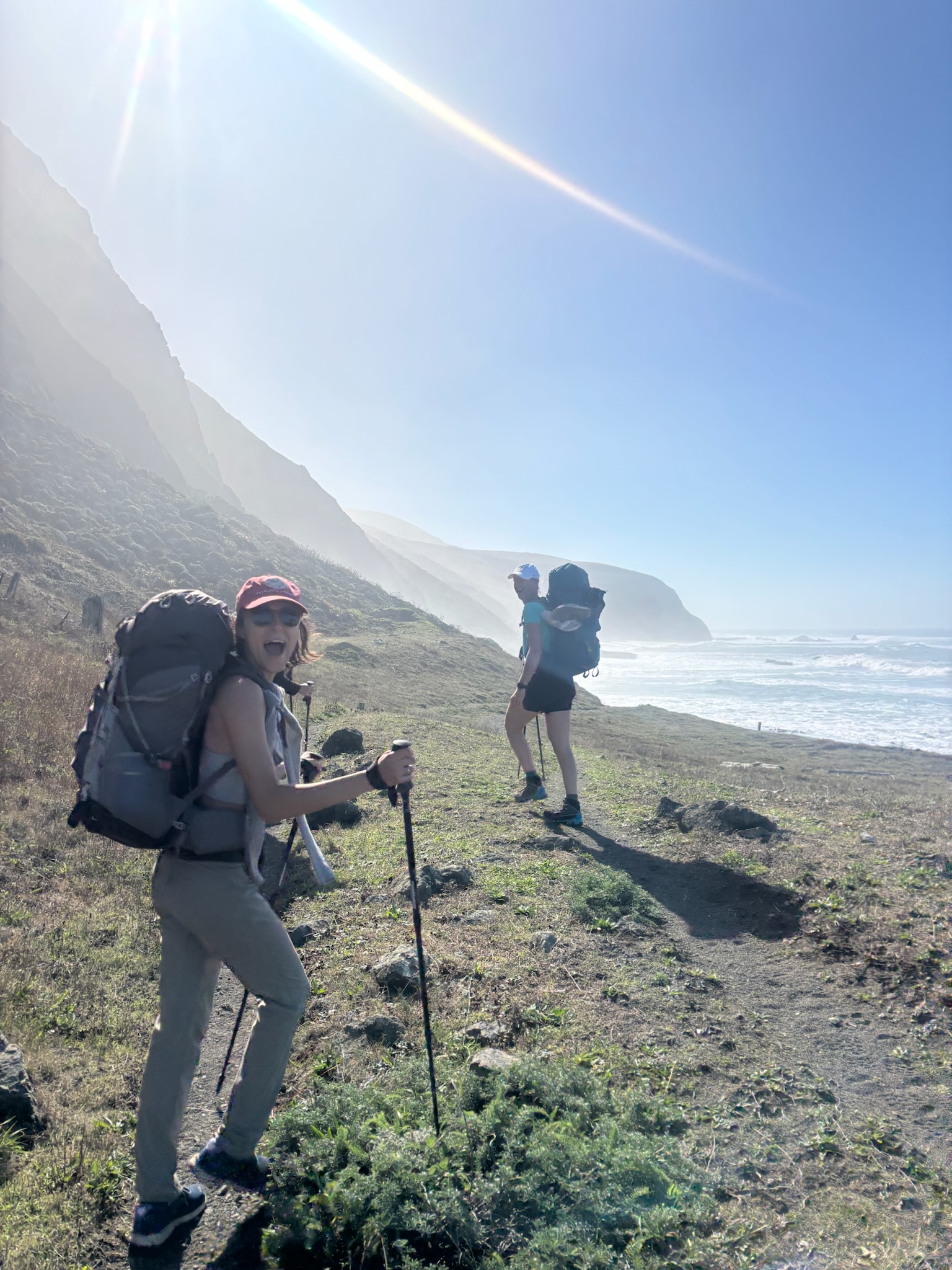
I’ve been away for a while. I grew up going to Foothills Park and Arastradero Preserve and any hike either of those places is great. My family now lives in Gilroy, so we go to Henry Coe State Park, and it’s beautiful. You can hike up and look out over the valley and Gilroy. I’m excited to explore more hikes up on the Peninsula, in Marin, and further north.
We definitely want to hear why you chose palliative medicine, but first—what were you doing before jumping into the fellowship?
I was in emergency medicine residency right before this. But growing up, I always thought I would go into conservation ecology. That was my real passion. In undergrad, I had the option to study abroad in tropical ecology or global health. I chose global health to be absolutely sure I didn’t want to do anything in medicine. Turns out I went to Central America and fell in love with community health. The concept that building a healthy ecological environment also improves human health was (and is!) captivating.
I thought I would go into infectious disease, but in med school I did an MD/MPH at Tufts, and my interests shifted toward anti‑racism and cultural humility initiatives. I ended up working with folks who were incarcerated and found myself drawn to caring for the underserved and the discarded in society.
A sense of wanting to make society more just and being drawn to experiences that were exciting and a little scary eventually led me to Emergency Medicine. It’s the field where you see the broadest cross‑section of society—really all comers that are seeking all kinds of medical care.
I came in bright‑eyed and bushy‑tailed thinking, “We can fix this system. There are public health interventions we can do out of the ED.” It felt like the place where you could engage with everyone.
My husband and I couples‑matched to the University of Tennessee. He’s still a Urology resident there, so I’m out here hanging on my own. Working in a county hospital in a state that doesn’t prioritize any semblance of collectivism, I got to see firsthand the major barriers to overhauling a very entrenched and dysfunctional system.
I still got a grant and to do some research looking at health‑care utilization among people who are unhoused with a hope it could inform housing-first initiatives. But I also ran into a lot of barriers, including not everyone being on the same page as me about championing these efforts.
We’re getting to Palliative Care! (laughs)
I’ve always been interested in people and their stories—a common theme in Palliative Care. I saw so many people with serious illness come into the ED coding, and I would resuscitate them when they had end-stage dementia or diffusely metastatic cancer. If they were my loved one, I wouldn’t necessarily want them to undergo such physically traumatic interventions. I kept wondering: Has anyone talked to them about their wishes? What quality of life is acceptable or unacceptable? What is the likely progression of their disease? Would they want this?
I did some Palliative Care electives. I got more hugs in one week than in three years of Emergency Medicine. It felt so different. I think the patients I saw on the Palliative Care service could tell how much we cared about them, and that was really hard to convey in the dysfunction of the ED. There I would think, I promise I care, but I’m constrained by the system. Palliative Care just felt beautifully different and natural.
After fellowship, where do you want to end up?
The perpetual question! I’m on the inpatient Palliative Care service at Parnassus right now, and if I could stay here, I’d love to.
There are aspects of the care and team dynamics here that I find remarkable. I love being at UCSF because health equity is the lens through which we view most things, and that deeply resonates with me. It should be the core of medicine—though it often isn’t. Being in a really healthy medical environment and comparing it to what I’ve seen elsewhere makes me think, Why wouldn’t I want to be here?
I know these values exist elsewhere too, but Palliative Medicine feels like it’s on the forefront of really trying to change the culture of medicine. It’s a place where we as practitioners and our patients get to (hopefully) honor the whole of our humanity. It feels refreshing and healing—for me, my patients, and their families.
Will where I want to end up change? Maybe… But I’ve asked many attendings I’ve worked with, “How do I get a job here?”
As you start your fellowship, what are you most excited to learn or explore this year?
Every location is different because of its history and its history of injustices. In Tennessee, during my Palliative Care rotations, it was fascinating to see how patients—particularly in a predominantly segregated Black and white population—related differently to Palliative Care.
I thought about how historically marginalized groups, and the systems of oppression and medical trauma they’ve experienced, influence how people perceive their care. When we come in and say, “If these life‑prolonging treatments are not giving you an acceptable quality of life, we don’t have to do them,” I imagine that can feel jarring—especially if you’ve been told implicitly and explicitly by society that you don’t matter. I would sometimes see more hesitancy to consider non-life prolonging pathways of care from my Black patients and their families.
I again can imagine that a lot of this could have to do with the burden of so many different systemic injustices that cause simply living life to feel like a fight for survival. Now here’s this team saying there’s an option to stop life-prolonging treatments? It could definitely feel like another way our medical system, founded in white supremacy, is trying to discard you. Palliative care alone is not going to fix medical racism, but it certainly needs to engage with its effects on our patients.
Now we’re in a different healthcare ecosystem, with a different population, and a different orientation toward these issues. Health disparities and equity remain key questions: How do we make our practice—which is already further along the spectrum of honoring the whole person and their experiences—envelop and embrace everyone? That’s what we should be trying to do.
How do you see your background shaping your approach to this fellowship?
At its deepest root, it’s my faith background. My mom’s family is Iranian, and our faith is the Bahá’í Faith. It’s a tradition that celebrates all religions and prioritizes service to others and independent investigation of reality and truth. There’s no clergy. There are really cool teachings on the harmony of science and religion, the equality and interconnectedness of all peoples, and the need for elimination of discrimination and bias—lofty but beautiful goals.
Growing up in a household and faith community where that was the culture has really flavored who I am. It’s been really exciting to be in a medical specialty that feels authentic to how I want to be of service in this world.
What’s a favorite hobby or activity you turn to for enjoyment or recharging?
I love people: friends, community, anybody. I get so much joy from friendly micro-interactions with strangers on the bus or out in the park. If I could sit next to someone doing nothing, I’d much prefer that to sitting alone doing nothing.
I also grew up dancing. I’ve always loved it as an outlet. I was classically trained in everything from ballet to hip hop and danced about 20 hours a week in college. Now it’s weddings, dance floors at whatever bar down the street, music festivals—wherever there’s a dance floor, that’s where you’ll find me!
Fun fact: The most jarring fun fact that I already shared with my fellow crew was that when I showed up to undergrad at Tufts, I was on the cover of the sociology textbook, which was super random. My friend said, “I think you’re on this cover,” and I thought, Why would I be on a textbook?
It turned out to be a photo of me at a Holi festival at Stanford—my best friend from childhood is Indian so we went every year—and I must have signed some kind of waiver. But it was literally just my face on the cover. Anyway, we ended up buying a copy.